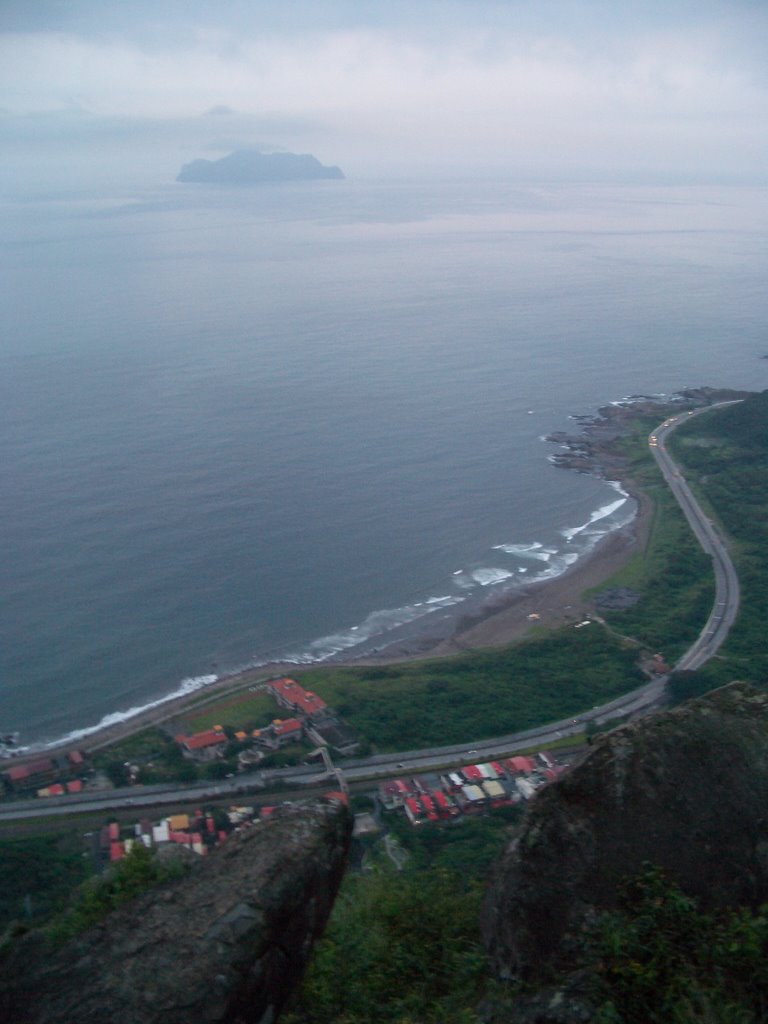
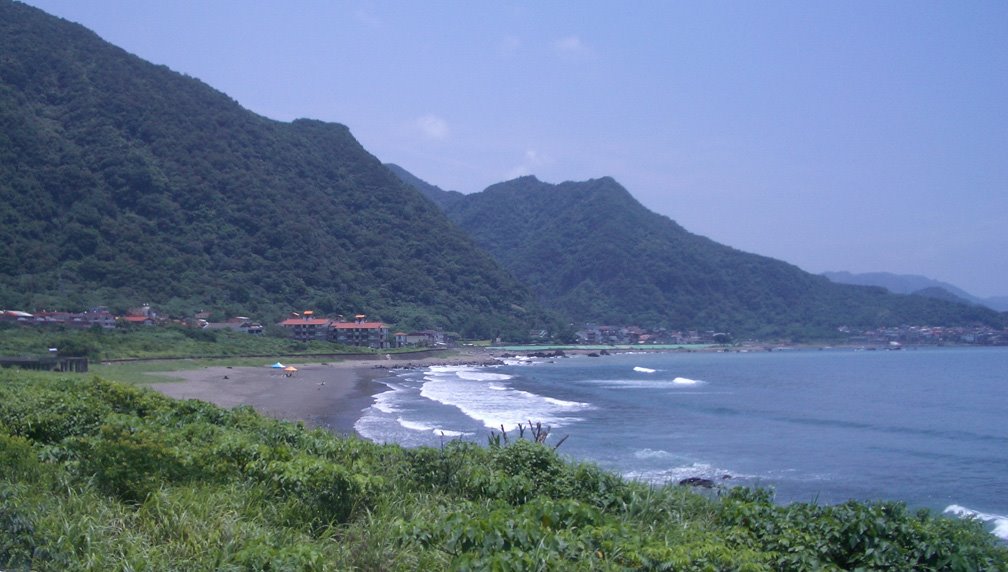
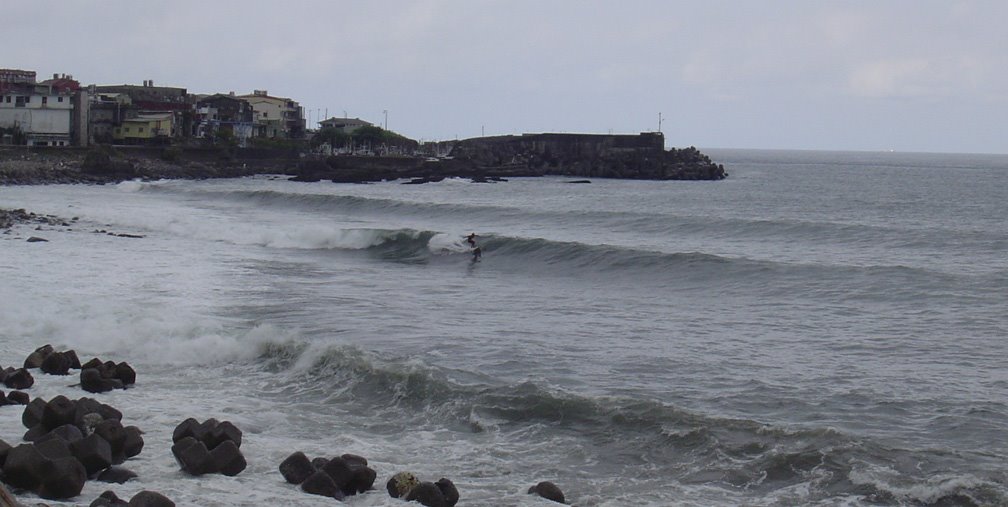
Fulong Beach
Northeast Coast

Take any train that travels East-bound out of Taipei. It is an hour to an hour and a half ride depending on whether you get a fast train or not. Exit Fulong train station, walk straight to the stop-light at the intersection. Continue straight ahead for a few minutes to the public beach that’s on the South side of the Fulong beaches. Alternatively, take a left at the intersection with the stop-light, pass the 7-11 and continue right into the parking lot. This is the private beach at Fulong where you have to pay to get in, swimming is restricted, and it closes early. Only come here if you have to. Otherwise, continue past the parking lot on the road that the 7-11 is on. A 10 minute walk brings you to Longmen campground. Walk all the way through, over the suspension bridge, and for another 10 minutes along a stone path. Turn right, up a short stone path. The vegetation ends, opening up to the South side of the North section of Fulong beach, which is much larger than the public and private beaches put together. No fees or lifeguards here.
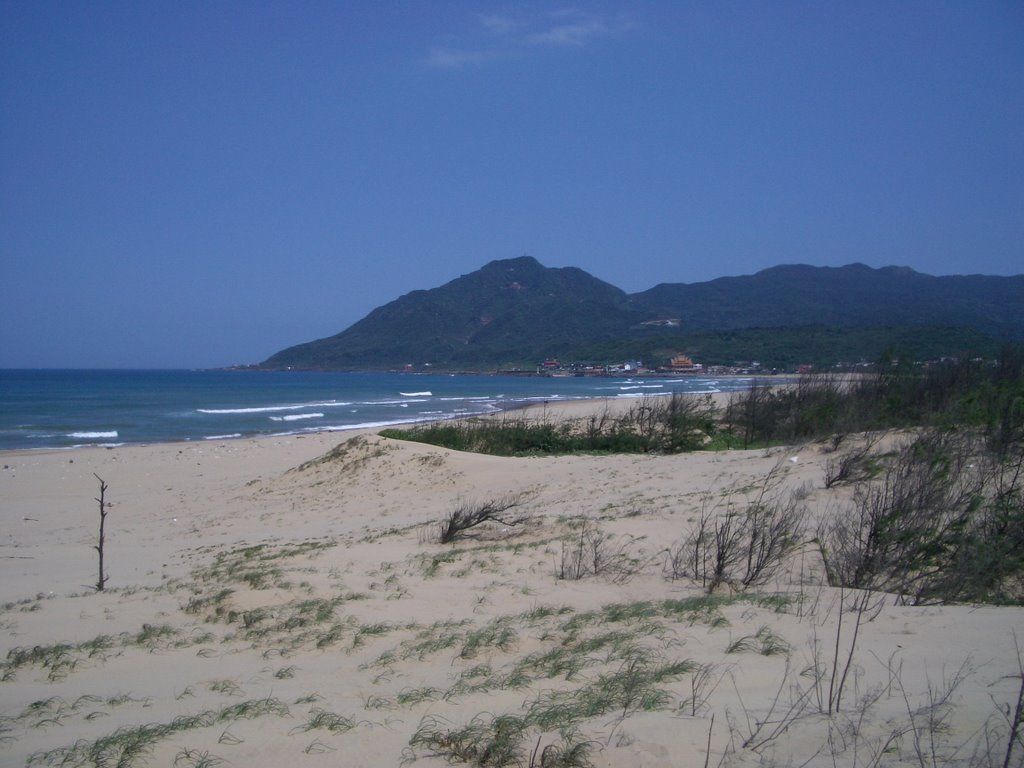 "The Spot" on the North section looking south.
The sand at Fulong is fine and golden. There’s usually some garbage, sticks, wood, shells, and other random beach artifacts. All areas along the beach coastline have pavillions. There are bathrooms at the train station, the private beach, and Longmen campground. There’s a small river that divides the public beach, the private beach, and the North section of Fulong beach. The North section has a few trails that follow the entire coastline and beach.
The shoreline at Fulong is very shallow- a few hundred feet walk out and the water is chest height. There is no coral here. There can be strong currents and rips, especially during typhoons.
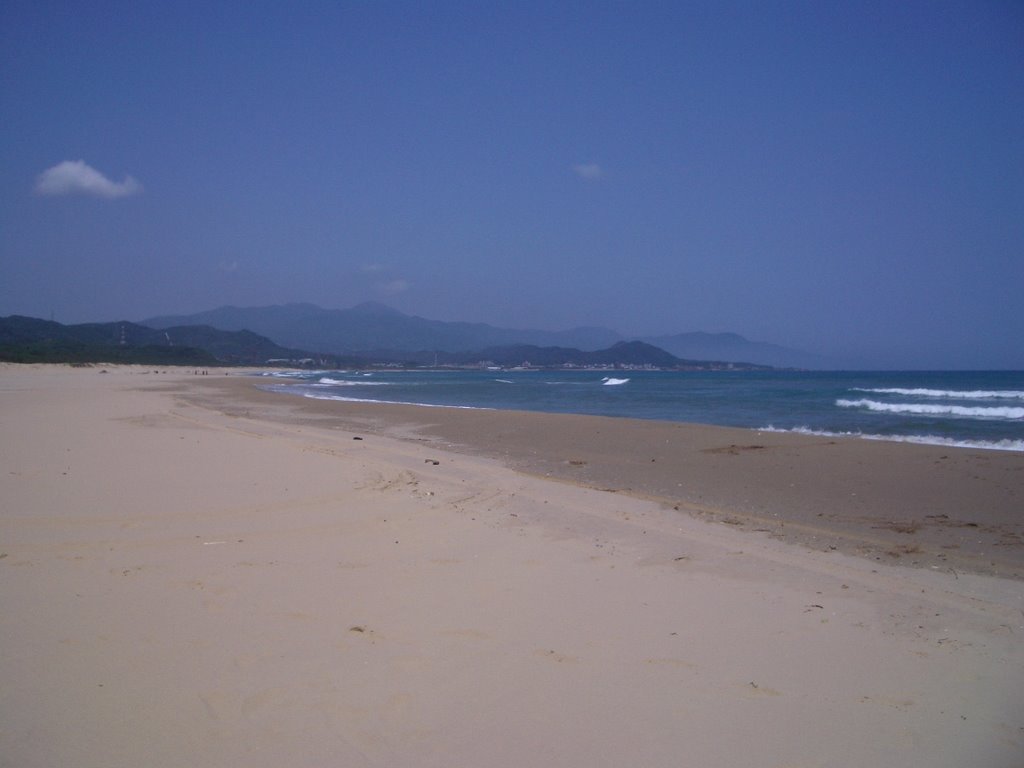 The North section of Fulong Beach
Waves break next to the harbor wall that’s on the right side of the public beach. The next wave to the left breaks where the rivermouth is. The rest of the private beach and the North end have several nice sections of ridable waves. On typhoon days, the waves break further out, up to hundreds of meters off shore. The waves at Fulong tend to be smaller than other nearby places, like Dahsi or Jinshan.
The people at Fulong are friendly, but make sure you don’t pay for something you don’t have to.The public beach can get crowded during the summer. The private beach gets crowded with tourists that don’t even get in the water- they just take pictures. The North section of Fulong beach is uncrowded and rustic.
Fulong lunch boxes are famous and cheap at $50 NT. There are a few Chinese and seafood restaurants in Fulong. There’s one 7-11. There’s no grocery, but some local vegetables and fruit. There is a coffee shop/ hostel that serves good lasange and a few other dishes. It is located on the right after you exit the train station.
There is one boardshop, turn left at the intersection with the stop-light. It’s on the left side, across from the 7-11. Boards can be rented on the beach during the summer months.
There are a few hostels in Fulong. There may be single rooms to rent. Camping is excellent in Longmen campground (for a small fee) or free anywhere along the North section of Fulong beach. Camping is rustic anywhere along the North section. The nearest bathrooms and showers are located in Longmen campground.
Baishawan
North Coast
 Trails next to the rustic section.
Drive a scooter or car North on Highway #2 out of Taipei, passing Shilin, Beitou, and Damshui. Continue North on #2 past Sanzhi. 4 km after Sanzhi, turn left into the Baishawan beach area. The popular beach is immediately on the right. The uncrowded, rustic beach is at the North end of the drive. Parking is available all along this drive. If you have no wheels, take the MRT to Damshui and then a bus to Baishawan. There is a bus that goes to Jinshan that passes by Baishawan.
Baishawan means “White Sand Bay” in Chinese. The sand is only a little corse, mostly fine. There is usually a small amount of garbage and things on the beach. The headlands next to the beach provide cover and a convenient outdoor bathroom. North of the bay is a trail with volcanic rocks that jut out into the ocean. There is cover and changing spots within the rocks. Across from the popular section of Baishawan there are bathrooms and showers.
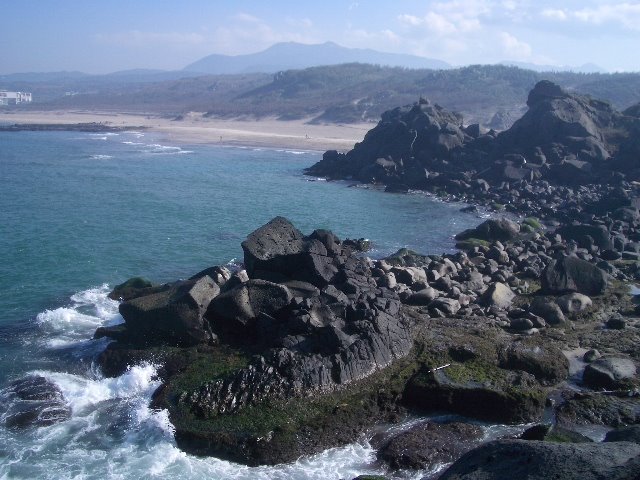
The bay is seperated by a large volcanic rock outcropping in the middle of the two sections. The shoreline is shallow and there isn’t any coral or rocks other than the outcropping. Currents and rips are strong here, especially during typhoons. People drown here every year because the get pulled out and aren’t strong swimmers. There are no lifeguards on the rustic section of the beach.
 The coral outcropping at Baishawan.
Waves break to the left and right of the coral outcropping. Waves can also break to the left and right of these waves, on the popular beach and on the cove that’s to the left of the rustic beach. Large swells can create a choppy mess at Baishawan. Baishawan is better for camping, swimming, and hiking. The waves are usually better at nearby Jinshan.
Tourists at Baishawan stay at the popular beach that is closer to the entrance and the restrooms. The rustic beach has much less of the crowd. Local people are friendly and helpful.
 Visit the trails next to the rustic beach.
Next to the left-turn entrance at Baishawan are a few seafood restaurants. One of them has cold shark with soy sauce and wasabi for cheap. Drinks can be bought in front of the stores and restaurants. There is a small store on the North side of the rustic beach with drinks. Sometimes there are vendors selling grilled sausage and other food. Along the road to Baishawan, near Sanzhi on the #2 Highway, there are red-heart guavas for sale.
There aren’t any boardshops at Baishawan. There are a few small stores with bathing suits, goggles, inflatable toys, and not much else.
There may be rooms for rent overnight at Baishawan. There isn’t a hotel. Camping is best on the rustic beach.
Jinshan New Beach
North Coast
Wannasurf spot guide:
http://www.wannasurf.com/spot/Asia/Taiwan/jin_san__golden_mountain_/index.html
http://www.wannasurf.com/spot/Asia/Taiwan/jin_san__golden_mountain_/index.html
From Taipei, drive North on Zhongshan North Road (#9) through Shilin. Follow Highway #2•“ (pronounced “jia.”) Turn right on #2 §A (pronounced “yi.”) Then, the #2§A changes back into the #2•“. Follow the signs through Yangming Mountain National Park all the way to Jinshan. At the first large intersection at Jinshan, turn left and follow the #2 North of Jinshan. Pass the gas station on the right. A few minutes later, turn right into the parking lot at Jinshan New Beach. Alternatively, take a bus from Taipei to Jinshan, or a train to Jeelong and a bus to Jinshan. Walk North along the coast from the city.
The sand at Jinshan is fine and golden. There are cement boulders at the North and South ends of the beach. There are bathrooms and showers next to the parking lot. The far walk to the South end passes a large cement boat launch and continues on to another section of uncrowded beach.
The shoreline at Jinshan New Beach is steeper than at Fulong and Baishawan. There can be a nice shorebreak in the middle of the first section of the beach. Watch out for the rusted metal embedded into the ocean floor next to the boat launch. There is coral in the middle of the first section of the beach. Be aware of currents that run parallel to the beach.
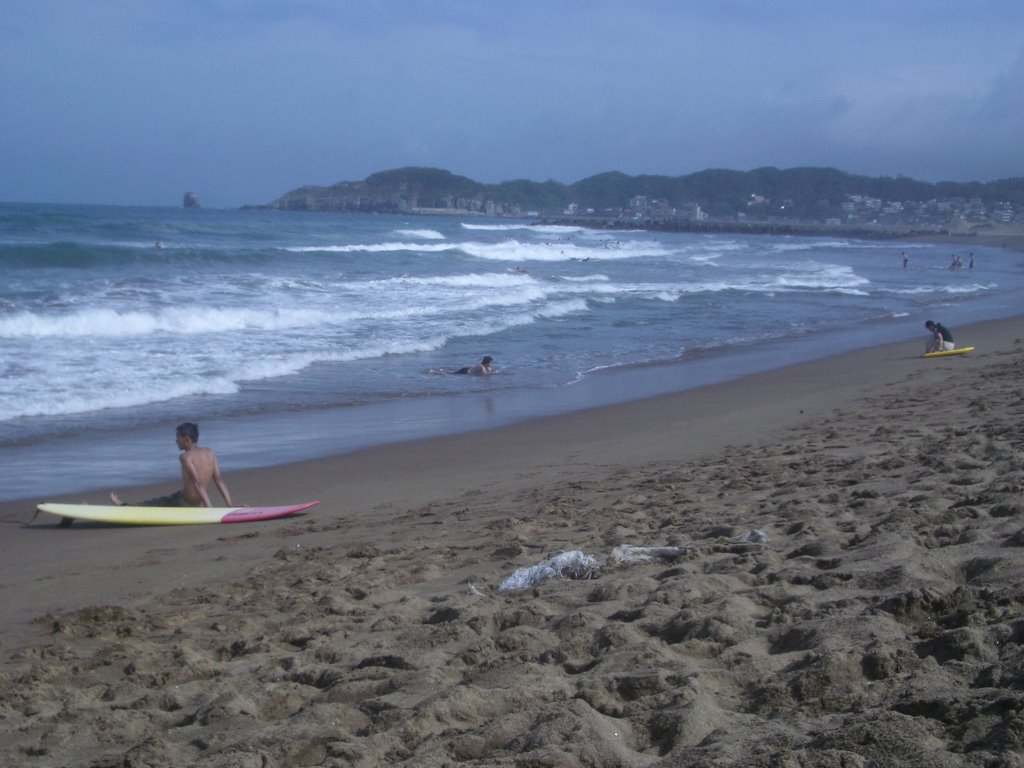
Waves break at Jinshan New Beach on the left into the bay, in the middle over the coral, and on the right next to the boat launch wall. Jinshan waves are usually better than Baishawan and Fulong. The waves are mushy and there can be a shorebreak in front of the coral in the middle of the first section.
Jinshan is uncrowded during the winter and crowded during the summer. Sometimes there are so many people in the water on surfboards that it’s better to go somewhere with less people. There are a lot of surfers and young people. The locals are friendly.
There are food vendors in the summer that sell sausages and cold drinks. There is also a small restaurant with a few options. The closest 7-11 is back in Jinshan at the large intersection on #2. There is a grocery store in downtown Jinshan, as well as Japanese food, Chinese food, pizza, and fried chicken. There are fruit and vegetables for sale along the road in Yangming Mountain National Park and Jinshan.
There are a few boardshops at the beach in Jinshan. Johnny Rose is the most famous one. Boards can be rented on the beach and you can leave your board for a fee at the shops. The boardshops are also hostels with rooms for $??? A night. There aren’t any hotels, but there are rooms for rent and other hostels in Jinshan. Camping is excellent anywhere on the beach.